
Liposuction
Liposuction
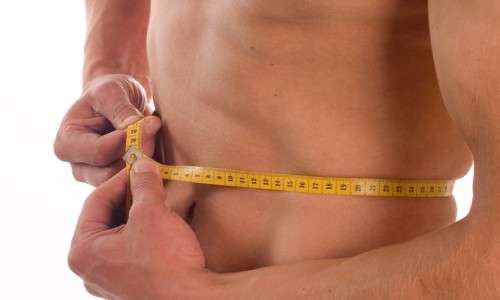
Liposuction slims and reshapes specific areas of the body to give a beautiful contour and proportion by removing excess resistant fat deposits. Liposuction is a surgical procedure that involves removal of subcutaneous resistant fat by means of aspiration cannulae introduced through small skin incisions called “adits”, assisted by suction. Liposuction techniques may be used to reduce localized fat deposits of the:
- Thighs
- Hips and buttocks
- Abdomen and waist
- Upper arms
- Back
- Inner knee
- Chest area
- Cheeks, chin and neck
Liposuction can be performed alone or along with other plastic surgery procedures, such as a facelift, breast reduction or a tummy tuck.
Synonyms
liposuction surgery, suction-assisted lipectomy, suction lipoplasty, fat suction, blunt suction lipectomy, and liposculpture.
Liposuction in Western world
Liposuction is one of the most commonly performed cosmetic procedures today in western world. Dermatologists now perform about one third of these procedures in the United States and have pioneered many of the advances in liposuction, especially in the fields of ambulatory surgery and local anaesthesia, to minimize pain and uncomfortableness caused to patients.
Liposuction in Pakistan
In Pakistan, in the past decade awareness about cosmetic surgery has increased dramatically. Globalization, improved affluence, access to information via internet and television, and a high degree of awareness about health and beauty have all led to an increasing demand for aesthetic procedures. An increasing number of dermatologists are now performing aesthetic procedures, but to choose a qualified dermatologist / cosmetic surgeon is necessary.
Basics-Structure of fat
Subcutaneous fat is arranged in the form of lobules separated from each other by septae. The fibrous septae consist of blood vessels, nerves, and lymphatics. Each lobule consists of fat cells, which consist mostly of triglycerides and fill up the cell almost entirely, pushing the nucleus to one side. It has been shown that during initial weight gain in any person, there is an increase in the size of the fat cell. With continued weight gain, there is, a subsequent increase in the number of fat cells, as mesenchymal stem cells get converted to fat cells.
History of Liposuction
Liposuction was initially developed in the late 70’s in Italy and France. At that time, liposuction was performed under general anaesthesia without any introduction of fluid, hence, called “dry liposuction”. Later, a “wet technique” was developed that involved introduction of a small amount of fluid into the fat. Both of these methods were associated with much blood loss, and patients frequently required blood transfusions. In 1985, Dr. Jeffrey A. Klein, a dermatologist in California, revolutionised liposuction surgery with the introduction of “Tumescent Technique”, which permits liposuction totally by local anaesthesia and with minimal surgical blood loss. Further modifications such as power liposuction and ultrasonic liposuction have been introduced with variable results. Despite these advances, the tumescent technique remains the worldwide standard of care for liposuction.
Candidacy
To be a good candidate, one must usually be over 18 and in good general health, have an ongoing diet and exercise regimen, and have fatty pockets of tissue available in certain body areas. Significant disease limiting risk (e.g. diabetes, any infection, heart or circulation problems) weigh against the eligibility of a person for the procedure. In older people, the skin is usually less elastic, limiting the ability of the skin to readily tighten around the new shape.
Challenges we meet
The basic surgical challenge of any liposuction procedure is:
- To extract the right amount of fat.
- To cause the least disturbance of neighboring tissue, such as blood vessels and connective tissue.
- To leave the person’s fluid balance undisturbed.
- To cause the least discomfort to the patient.
Tumescent Liposuction
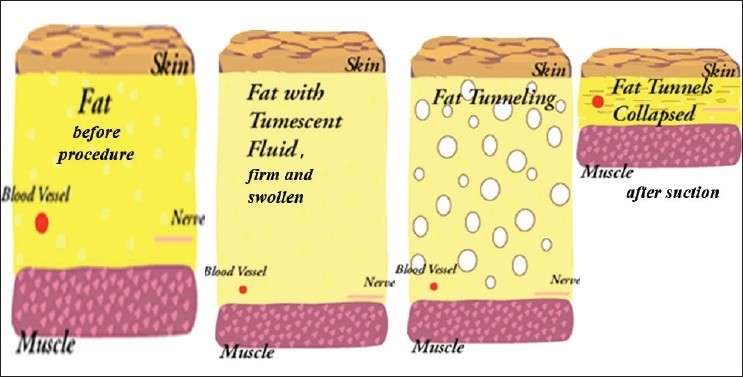
The word “tumescent” means swollen and firm. In “Tumescent Liposuction” a large volume of very dilute lidocaine (local anesthetic) and epinephrine (capillary constrictor) is injected into subcutaneous fat, and the targeted tissue becomes swollen and firm, or tumescent. The tumescent liposuction technique is a method that provides local anesthesia to large volumes of subcutaneous fat and thus permits liposuction totally by local anesthesia. The tumescent liposuction technique eliminates both the need for general anesthesia and need for IV narcotics and sedatives. The tumescent technique for liposuction: 1) Provides local anesthesia, 2) Constricts capillaries and prevents surgical blood loss. 3) Provides fluid to the body by subcutaneous injection so that no IV fluids are needed.
Tumescent Dilution
A tumescent anesthetic solution contains a 5 to 40 fold dilution of lidocaine found in commercially available formulations of local anesthesia. Commercial solutions of lidocaine used by dentists and anesthesiologists typically contain 1g lidocaine+ 1 mg of epinephrine per 50 mL of saline. In contrast, tumescent solutions of local anesthesia contain same amounts of lidocaine and epinephrine in 1,000 mL of saline. So, this is a 20 fold dilution of the commercial version of lidocaine and epinephrine.
Patient preparation
Before receiving any of the procedures, no anticoagulants should be taken for two weeks before the surgery.
Book An Appointment Now
Other Services
- Gastric Ballooning/Banding
- Vitiligo Treatment
- Chemicals Peel
- CoolSculpting
- Dermal Fillers
- Laser Hair Removal
- Psoriasis Treatment
- Microdermabarison
- Botox Injections
- Laser Resurfacing
- Autologous Wrinkle Fillers/ Fat Grafting